Recruiter Wellness & Burnout

Articles addressing recruiter burnout, decision fatigue, and mental overload caused by manual resume screening — and how better tools can support sustainable hiring.

Why Explainability Matters in Candidate Ranking

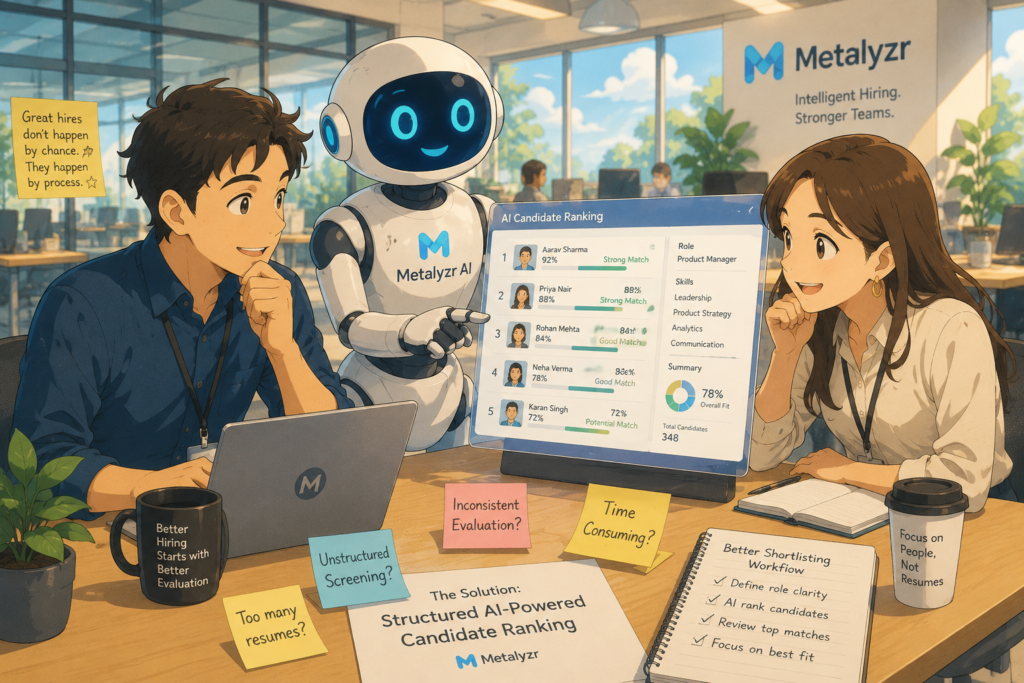
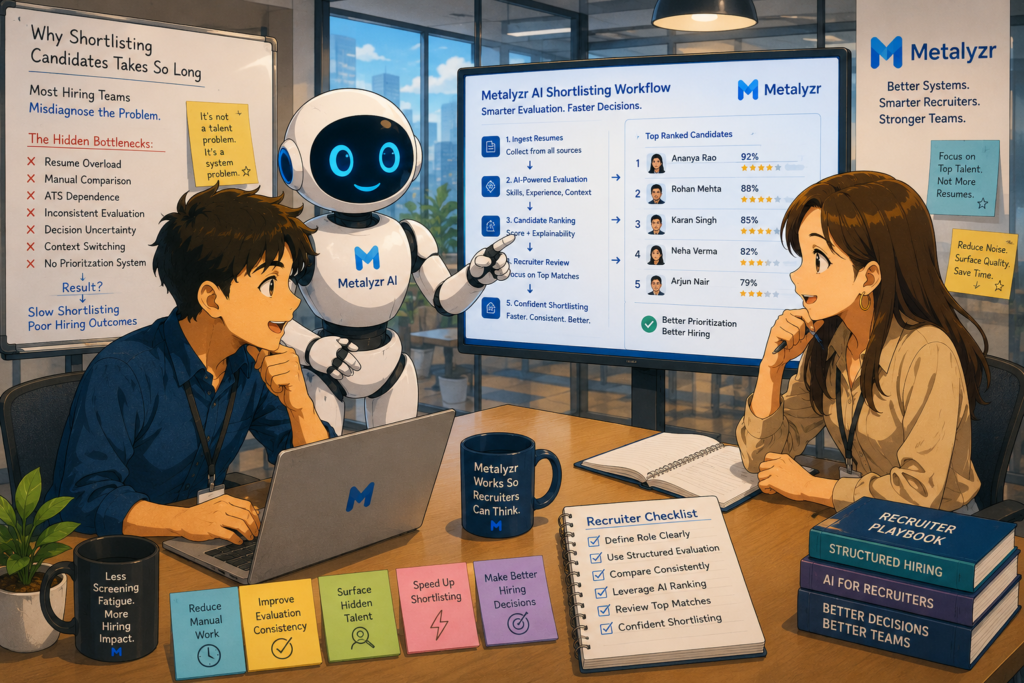
Why Shortlisting Candidates Takes So Long — And Why Most Hiring Teams Misdiagnose the Problem

Most hiring teams think candidate shortlisting takes too long because recruiters are overloaded. That is only partially true. The deeper issue is this: Most recruitment workflows were never designed for high-volume decision-making. Modern recruiters are expected to: But the systems supporting them are often fragmented, manual, and reactive. This is why shortlisting delays are becoming
Why Shortlisting Candidates Takes So Long — And Why Most Hiring Teams Misdiagnose the Problem Read More »

Why Most Hiring Teams Are Stuck in Reactive Workflows

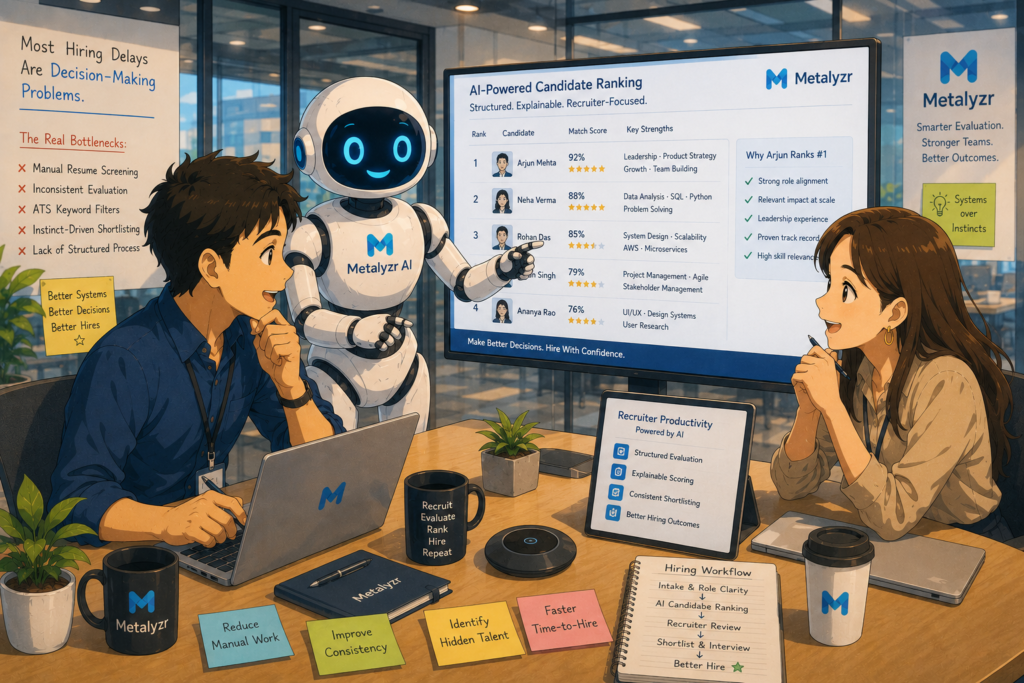
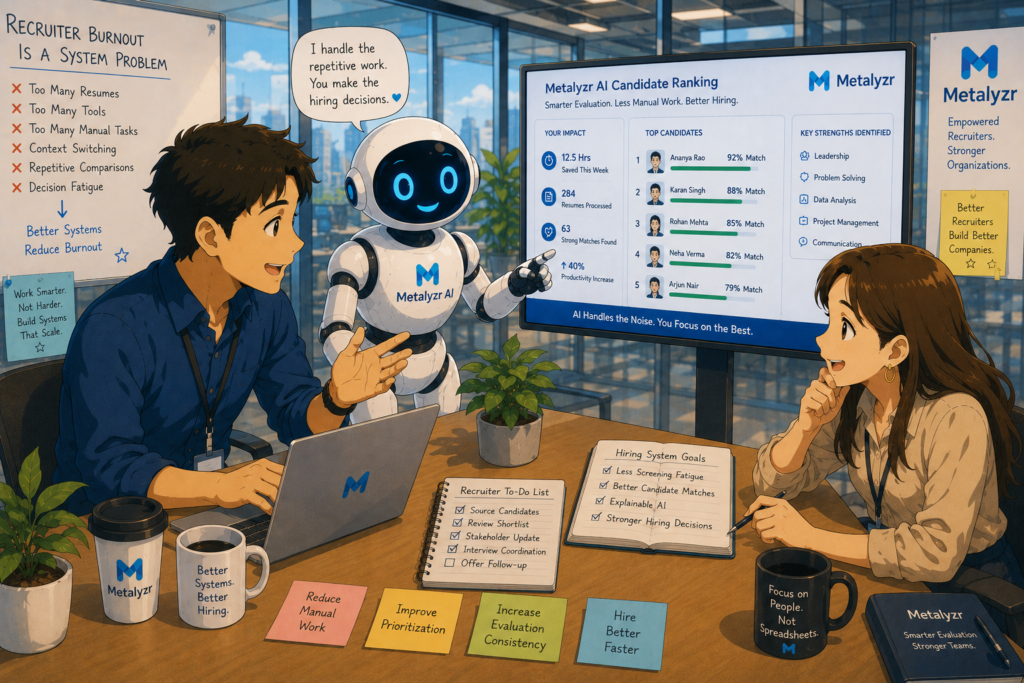
Recruiter Burnout Is Becoming a Hiring System Failure — Not a Workload Problem

Most recruiters are not tired because they lack motivation. They are tired because modern hiring workflows are structurally broken. Too many resumes.Too many repetitive tasks.Too many manual comparisons.Too many disconnected systems. And not enough decision support. The recruitment industry quietly normalized recruiter overload for years. Now AI is exposing how inefficient many hiring workflows actually

Recruiter Burnout Is Becoming a Hiring System Failure — Not a Workload Problem Read More »

Why ATS Filtering Breaks Modern Hiring

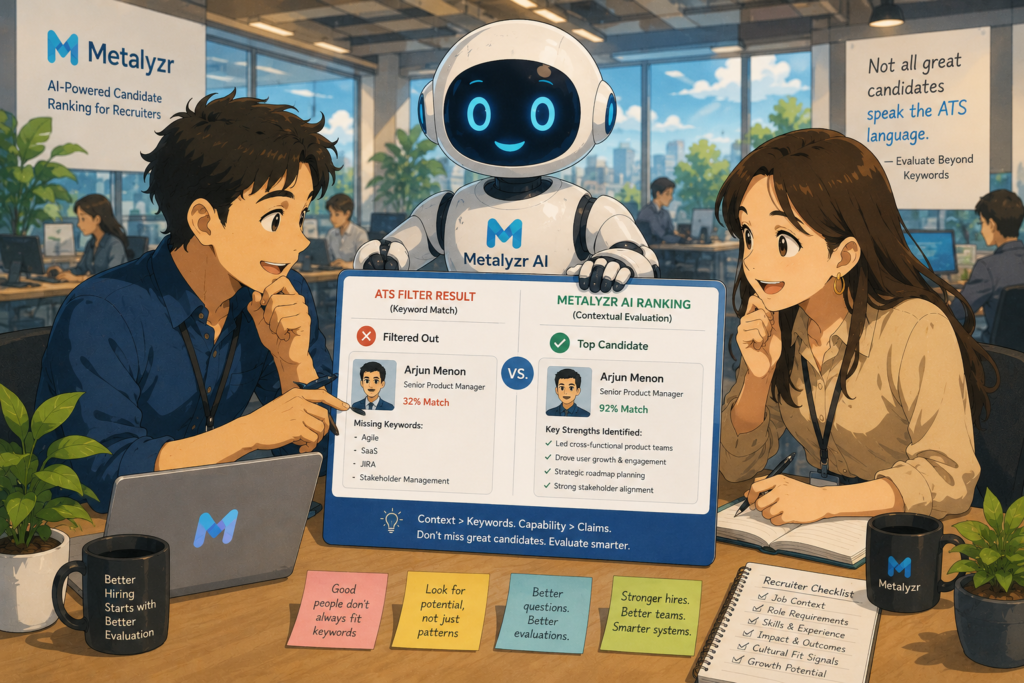
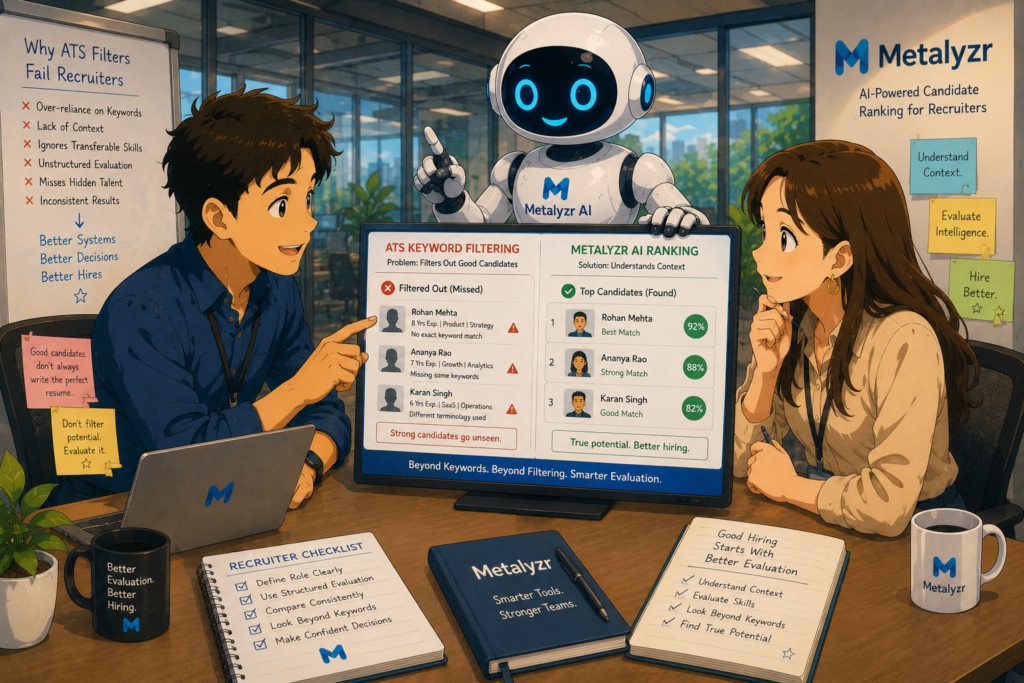
ATS Resume Filters Are Rejecting Good Candidates — And Recruiters Know It

Most recruiters have experienced this moment: A hiring manager asks,“Why was this candidate rejected?” And the honest answer is uncomfortable: “The ATS probably filtered them out.” This is becoming one of the biggest hidden problems in modern recruitment. Applicant Tracking Systems (ATS) were originally designed to organize resumes and reduce recruiter workload. But many hiring

ATS Resume Filters Are Rejecting Good Candidates — And Recruiters Know It Read More »

ATS Filters Remove Good Talent

Most Hiring Delays Are Not a Talent Problem. They’re a Decision-Making Problem.

Recruitment teams often believe hiring delays happen because “good candidates are hard to find.” But after reviewing hundreds of hiring workflows, a different pattern appears: Most hiring delays happen because teams cannot confidently decide who deserves attention first. That is a systems problem — not a talent shortage problem. Modern recruiters are drowning in resumes,

Most Hiring Delays Are Not a Talent Problem. They’re a Decision-Making Problem. Read More »

Resume Screening Is Usually More Emotional Than Teams Admit

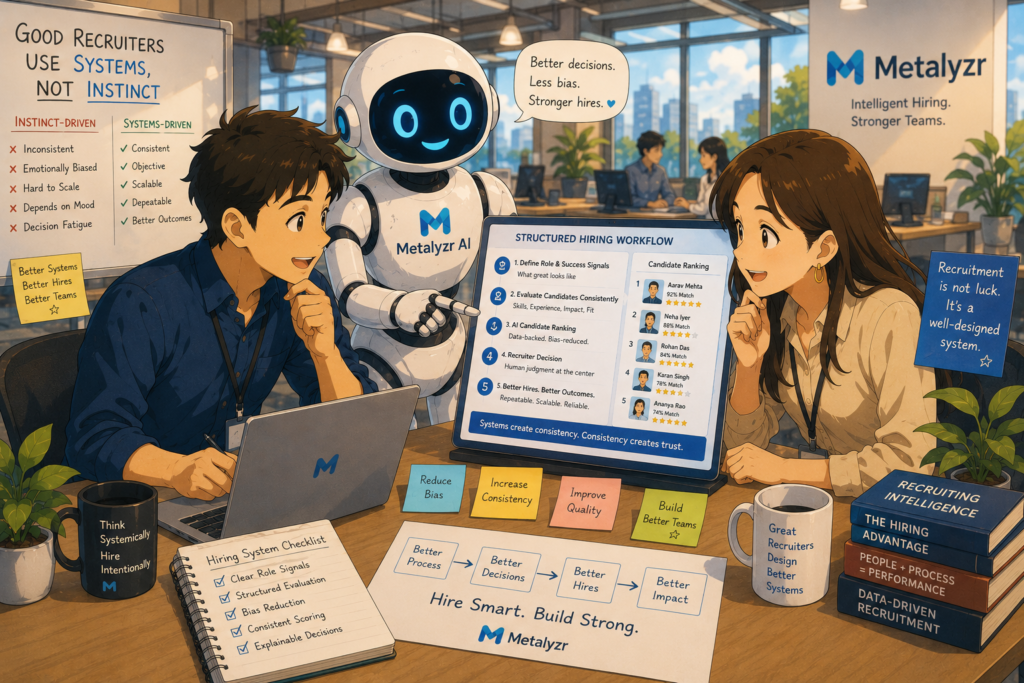
Good Recruiters Use Systems, Not Instinct

Most recruiters trust their instincts. And to be fair, instinct matters in hiring. Experienced recruiters develop pattern recognition over years of evaluating candidates, managing hiring managers, handling interviews, and navigating people dynamics. But there’s a hidden problem with instinct-driven hiring: Instinct does not scale consistently. Especially when recruiters are handling: At some point, hiring stops

Good Recruiters Use Systems, Not Instinct Read More »

The Best Recruiters Are Becoming Systems Thinkers

Why ATS Filters Reject Good Candidates — And What Recruiters Often Miss

Most recruiters have experienced this moment before: A candidate performs exceptionally well in interviews… …but their resume almost got filtered out earlier in the hiring process. That’s the uncomfortable reality of modern resume screening. Many hiring teams rely heavily on ATS filters, keyword searches, and resume matching systems to manage application volume. But as candidate

Why ATS Filters Reject Good Candidates — And What Recruiters Often Miss Read More »

Why Shortlisting Candidates Takes So Long — And How Recruiters Can Fix It

Why Shortlisting Candidates Takes So Long — And How Recruiters Can Fix It

Most recruiters don’t actually have a hiring problem. They have a candidate evaluation problem. Resume screening today is still heavily dependent on manual scanning, ATS filters, gut instinct, and fragmented recruiter workflows. As application volumes grow, recruiters end up spending more time comparing resumes than actually evaluating talent. And that creates a hidden operational bottleneck

Why Shortlisting Candidates Takes So Long — And How Recruiters Can Fix It Read More »

The Future of Recruitment Is Already Here

The Future of Recruitment Is Not AI vs Humans — It’s AI-Assisted Human Decision Making

Recruitment conversations in 2026 are increasingly dominated by one question: “Will AI replace recruiters?” But that framing completely misses where the industry is actually heading. The future of recruitment is not AI replacing human hiring teams. It’s AI reducing operational overload so recruiters can make better decisions faster. And the companies understanding this shift early

The Future of Recruitment Is Not AI vs Humans — It’s AI-Assisted Human Decision Making Read More »

Why Candidate Ranking Matters More Than Resume Volume

The Psychology of Resume Screening Fatigue (And Why Teams Ignore It)

Most recruiters don’t notice resume screening fatigue when it starts. Because at first, it looks like productivity. More tabs open. More resumes reviewed. More shortlists created. But after hours of continuous candidate evaluation, something subtle begins happening: And eventually, hiring quality starts declining quietly inside the workflow. The problem is not recruiter capability. It’s cognitive

The Psychology of Resume Screening Fatigue (And Why Teams Ignore It) Read More »

Why Productivity Will Become a Hiring Advantage

Why Recruiter Productivity Will Matter More Than Recruiter Headcount in 2026

For years, companies scaled hiring by adding more recruiters. More open roles meant: But recruitment economics are changing. In 2026, the companies hiring fastest are not always the companies with the biggest recruiting teams. They’re the companies with the most operationally efficient recruiters. Because modern hiring is increasingly a productivity problem — not simply a

Why Recruiter Productivity Will Matter More Than Recruiter Headcount in 2026 Read More »