
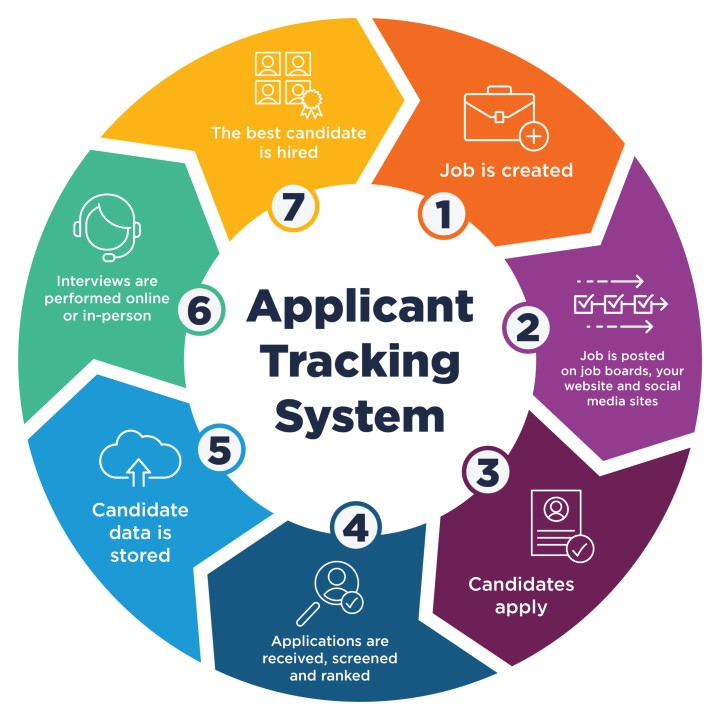
Recruiters who have worked across multiple Applicant Tracking Systems over the last two decades notice a recurring pattern:
ATS vendors talk extensively about AI, yet the core screening logic changes very little.
This is not because vendors are unaware of better approaches.
It is because true AI-based resume evaluation challenges the foundations on which most ATS platforms are built.
What ATS Platforms Are Optimized For
At their core, most ATS systems were designed to solve operational problems:
- Resume storage
- Compliance tracking
- Workflow management
- Audit trails
- Reporting
These systems prioritize:
- Predictability
- Explainability
- Repeatable rules
- Low legal risk
This design philosophy makes sense for enterprise software.
It also explains why intelligent, context-driven screening is rarely implemented meaningfully.
Why True AI Creates Discomfort for ATS Vendors
Recruiters with long experience understand that real screening decisions involve:
- Trade-offs
- Context
- Role-specific judgment
- Imperfect but explainable reasoning
True AI introduces outcomes that:
- Are probabilistic, not deterministic
- May surface unexpected candidates
- Do not always align with rigid rules
- Require interpretation, not blind acceptance
For enterprise ATS vendors, this creates friction.
Control vs Judgment: The Core Conflict
Most ATS platforms are built to give organizations control.
True AI introduces judgment.
That distinction matters.
Control allows vendors to say:
- “This candidate was rejected because X”
- “The rule was applied consistently”
- “The system behaved as configured”
Judgment introduces nuance—and nuance is harder to defend in audits, compliance reviews, and internal escalations.
As a result, vendors default to safer, rule-based logic and label it “AI.”
Why Innovation Stalls at the Screening Layer
Recruiters often ask why ATS innovation focuses on dashboards, workflows, and integrations rather than screening quality.
The answer is simple:
- Workflow improvements do not challenge core assumptions
- Screening intelligence does
True AI-based screening would expose:
- Inconsistent job descriptions
- Weak evaluation criteria
- Over-reliance on keywords
- The limits of static rules
Those revelations are uncomfortable for buyers and vendors alike.
👉 Understand Why Screening Innovation Has Stalled
The Risk of Over-Promising “AI”
Experienced recruiters are increasingly cautious when hearing “AI-powered screening.”
They have learned that:
- Labels do not guarantee intelligence
- Automation is not evaluation
- Speed does not equal quality
When expectations are inflated and results do not improve, trust erodes—both in tools and in hiring teams.
Why Vendors Prefer Incremental Change
True AI-based screening would require:
- Re-architecting core systems
- Accepting less deterministic outputs
- Educating buyers on new mental models
- Sharing responsibility for decisions
Incremental UI improvements are safer.
Marketing “AI” without changing fundamentals is easier.
From a vendor perspective, this is rational.
From a hiring perspective, it limits progress.
Closing Perspective
Recruiters with decades of experience increasingly see the pattern clearly:
ATS platforms are designed to manage hiring processes.
They are not designed to make hiring judgments.
Avoiding true AI-based screening is not a technological limitation—it is a structural choice.
Until screening is treated as a decision problem rather than a filtering task, the gap between promise and reality will persist.
🔍 Explore What Real Resume Evaluation Would Look Like